



A large gray cylindrical water heater with copper pipes and a metal flue stands on a concrete pad in a dim basement, with wood framing and shelves of storage bins lit by a bare bulb behind it.

A pro who works on water heaters

How often to flush a water heater in Massachusetts

Most water heaters need a flush about once a year, but your water, your tank size and whether it's gas or electric all change that. Massachusetts water is generally kind to tanks, but sediment still builds up and it costs you in gas and in how long the tank lasts. This page gets into how often, what sediment does, and how to find a contractor who can check your specific tank.

Match me with a pro

Once a year is the right rule for most homes in Massachusetts. Sediment settles at the bottom of the tank every time it heats water, and a year is about how long it takes to build up enough to matter. Once it does, the burner or the element has to work through that layer to heat the water above it, and since most homes here run on gas, that shows up as a higher gas bill before it shows up as anything else. Left long enough, the sediment hardens and starts to eat at the bottom of the tank itself, which is how a water heater fails years before it should. A tank that sits in a basement that doesn't get touched much is the one most likely to get skipped. If yours has never been flushed, or you cannot remember the last time it was, that is the one thing worth changing this year.

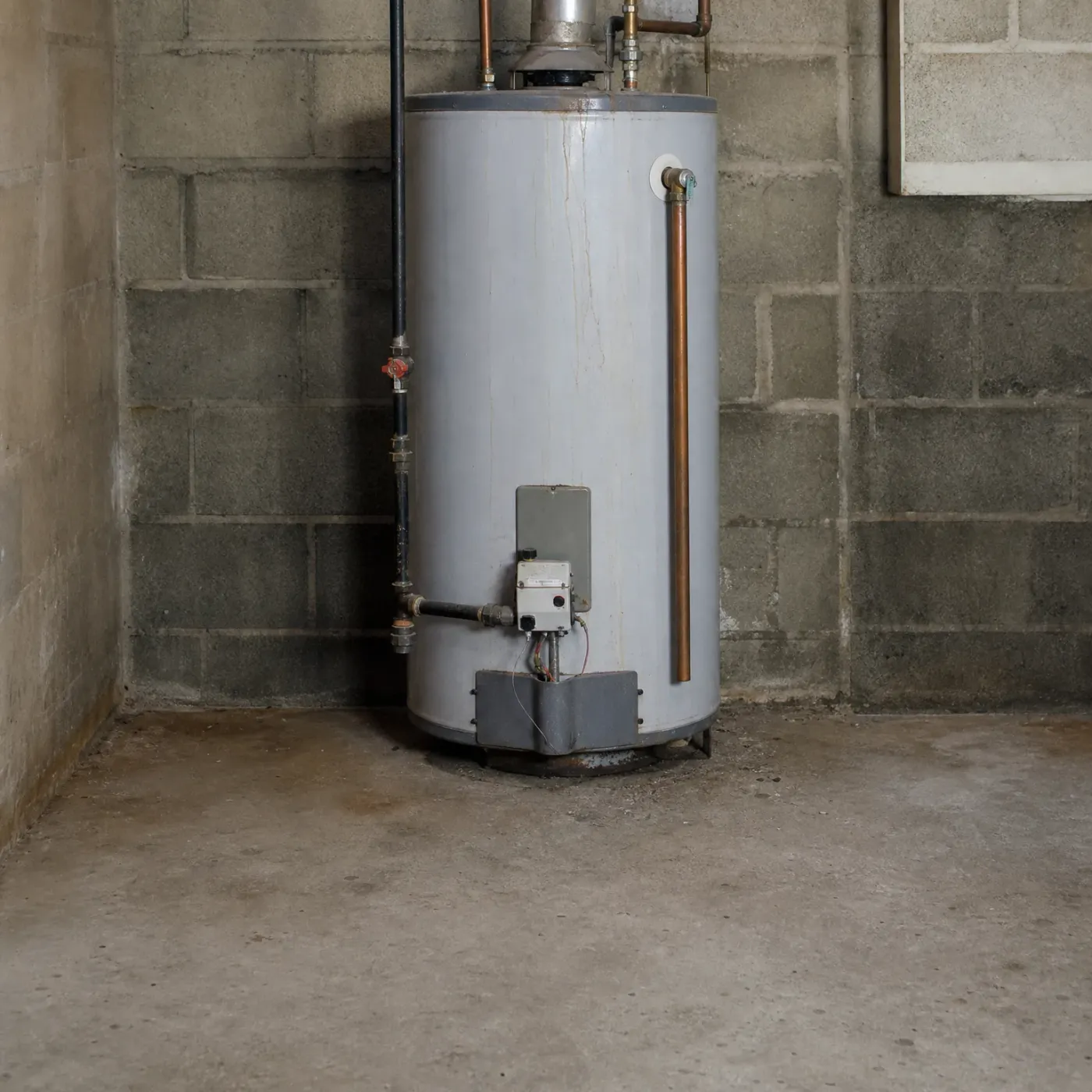
A tall gray cylindrical water heater with copper piping and a flue stands in the corner of an empty basement room with concrete block and painted walls.

Why sediment costs you in gas

A gas water heater heats from a burner underneath the tank. Sediment sits right on top of that burner plate, so the flame has to push heat through a layer of mineral grit before it ever reaches the water. That takes longer and burns more gas to get the same tank of hot water. Flushing the tank once a year clears that layer out and puts the burner back in direct contact with the water it's supposed to heat.

A gray cylindrical water heater stands in a drain pan against a concrete wall, with copper and white pipes running along the wall to the right and a plain light wall on the left.

What a flush actually removes

Opening the drain valve at the bottom of the tank lets you see what a year of heating has left behind: a cloudy rush of water followed by grittier, sandier sediment as the tank empties. Massachusetts water doesn't leave the heavy scale you'd get in harder water areas, but it still carries enough mineral content to settle out over months of heating cycles. A full drain, not just a few seconds of running water, is what clears the tank down to the bottom.

Is your water heater working harder than it used to?

You might notice the burner running longer before the water gets hot, or a faint rumbling or popping sound from the tank as it heats. Some homes hear it more than others depending on their water. The pilot light area or base of the tank can pick up a slight rotten-egg smell if sediment has sat long enough. None of this means the tank is failing. It means it's doing more work than it should to give you the same hot shower, and that work shows up on your gas bill. Left long enough, the buildup can shorten how many years the tank lasts before it needs replacing.

A gray cylindrical water heater standing in a basement corner against a concrete wall, with copper and black pipes, a metal flue, and ductwork nearby, next to wood framing on the right.

Flushed on schedule

This is what a tank looks like when the flush happens about once a year. The burner fires, heats a clean tank bottom, and shuts off. No popping, no rumbling, no extra gas spent pushing heat through grit. The pipes and flue do their job without the tank underneath them working any harder than it has to.

A gray cylindrical gas water heater with copper and black pipes stands in the corner of a basement with concrete block walls and a bare concrete floor.

Sediment left to build

Skip the flush long enough and the tank bottom fills with mineral grit the burner has to heat through every time. The gas valve underneath is calling for a longer burn to get the same hot water. Left alone, that layer keeps thickening, and the steel under it is what eventually gives out.

51.6% of homes statewide heat with gas

Most houses in Massachusetts heat water with gas, same as they heat the house. That burner sits right under the tank, so sediment buildup shows up fastest here: in extra gas burned and in a water heater that wears out sooner than it should.

ACS 2020-2024 5-year B25040

A gray-haired bearded man in a dark coat and scarf dusted with snow stands smiling in a dimly lit entryway with a white front door, a side table with a lit lamp, an oval mirror, and a patterned rug.
An older bearded man in a dark snow-dusted coat and gray scarf stands just inside a dimly lit home entry, with a framed picture, lit table lamp, and an adjoining room with a fireplace behind him, and snow visible through the open door.
A gray-haired, bearded man in a dark snow-dusted coat stands smiling in a dimly lit entry hall with a staircase, a lit table lamp, a framed picture, and a living room visible through a doorway.
An older man with gray hair and a beard, wearing a dark jacket dusted with snow, stands smiling in a dimly lit hallway with lamps and a living room visible behind him.

Get your water heater to the right pro

Send the form, and lining up the water heater tune-up stops being yours to chase.

It costs nothing to send, and you don't have to hire anyone.

Once a year, and you're set

  • Once a year keeps a gas water heater in Massachusetts burning clean instead of fighting through sediment.
  • A tank that's never been flushed is already working harder than it needs to, and the gas bill shows it.
  • Skipping flushes for several years in a row tends to shorten the life of the tank, not just raise the bill.
  • A flush is a simple job, but a tank that's gone untouched for years can need extra care to do safely.
  • Once you're matched with someone, you don't have to track down who's available or chase a callback yourself.
  • Finding the right contractor for your tank and your water is one less thing for you to sort out alone.

A gas water heater in Massachusetts does best with a flush about once a year. That keeps the burner heating a clean tank instead of pushing flame through a layer of sediment, which is where the extra gas goes and where the extra wear comes from. If a tank has gone a few years without one, the burner has likely been working harder than it needs to for a while, and the bill reflects that even if nothing sounds wrong yet. The longer sediment sits, the more it can bake onto the bottom of the tank, and at that point a flush is still worth doing but it takes more care to do without disturbing anything it shouldn't. None of that means the job is complicated. It means a tank that's been skipped for years isn't quite the same job as one flushed on schedule, and it helps to have someone who knows the difference handle it. That's the part you don't have to work out on your own. Once you send the form, the job of finding someone qualified stops being yours to carry. You're not left comparing names or waiting on a callback that doesn't come. A contractor who knows gas tanks and knows what Massachusetts water does to them gets matched to your situation, and reaches out to you directly. The flush itself is simple. Getting the right person to do it, especially on a tank that's waited a while, is the part worth not doing alone.

A single-story stucco house at dusk with a lit paver walkway lined by low path lights, desert plants and boulders in front, and distant mountains under an orange and blue sky.

Water Heater Maintenance

The right pro for this job

Step 1 of 3: Equipment
  • A corner of a room with an upholstered wood-framed armchair holding a floral pillow, a round side table with a ceramic lamp, books and a vase of greenery, a framed landscape painting on the wall, a patterned rug, and a sunlit multi-pane window.
    • Say what's going on with your water heater, and a pro who works on them reaches out.
    • A local pro who knows water heaters gets your details and gets in touch.
  • Interior corner with a wood-framed window showing green foliage outside, a framed landscape print on a beige wall, and a rounded stone vase of leafy branches on a wooden cabinet.
    • After this form, you can stop searching for a water heater pro.
    • One request and the search for a pro is handled.
  • A pale ceramic vase holding olive branches sits on a dark wooden countertop beside a carved wooden dough bowl, next to a wood-framed window and a light painted plank wall.
    • Fill out one form instead of calling around for a water heater tune-up.
    • Fill out one short form instead of calling around.
  • A dark wood round side table holding a brass lamp with a cream shade, a blue-and-white patterned bowl, and a white textured pot of greenery, beside an upholstered chair with a gray patterned cushion and a white-framed window showing green trees and flowering shrubs.
    • A licensed local pro takes the request for your water heater tune-up.
    • Your request goes to one pro, not a list of companies.