Tank or tankless water heater for a Massachusetts home

Send the request and finding a pro stops being your problem.

I'm done searching

Should I get a tank or tankless water heater in Massachusetts?

You've got a water heater decision to make, and with gas being the main fuel for heating in most Massachusetts homes and electricity rates running high here, the choice between tank and tankless matters more than it might somewhere else. You want to know which one actually fits a home like yours, not just a generic pros and cons list.

For most Massachusetts homes, a gas tank water heater is the simpler, more reliable choice

A gas tank water heater works well here because most homes already have a gas line running to the water heater, and gas keeps the running cost down in a state where electricity is expensive. A tankless unit can make sense if you run out of hot water often or you're replacing the heater anyway and want one that lasts longer, but it needs a gas line sized for the higher demand and sometimes new venting. If your home already has a gas tank system in place, a gas tank replacement is usually the straightforward path. If you're on electric, tankless electric units exist but draw a lot of power, and that cost adds up fast here.

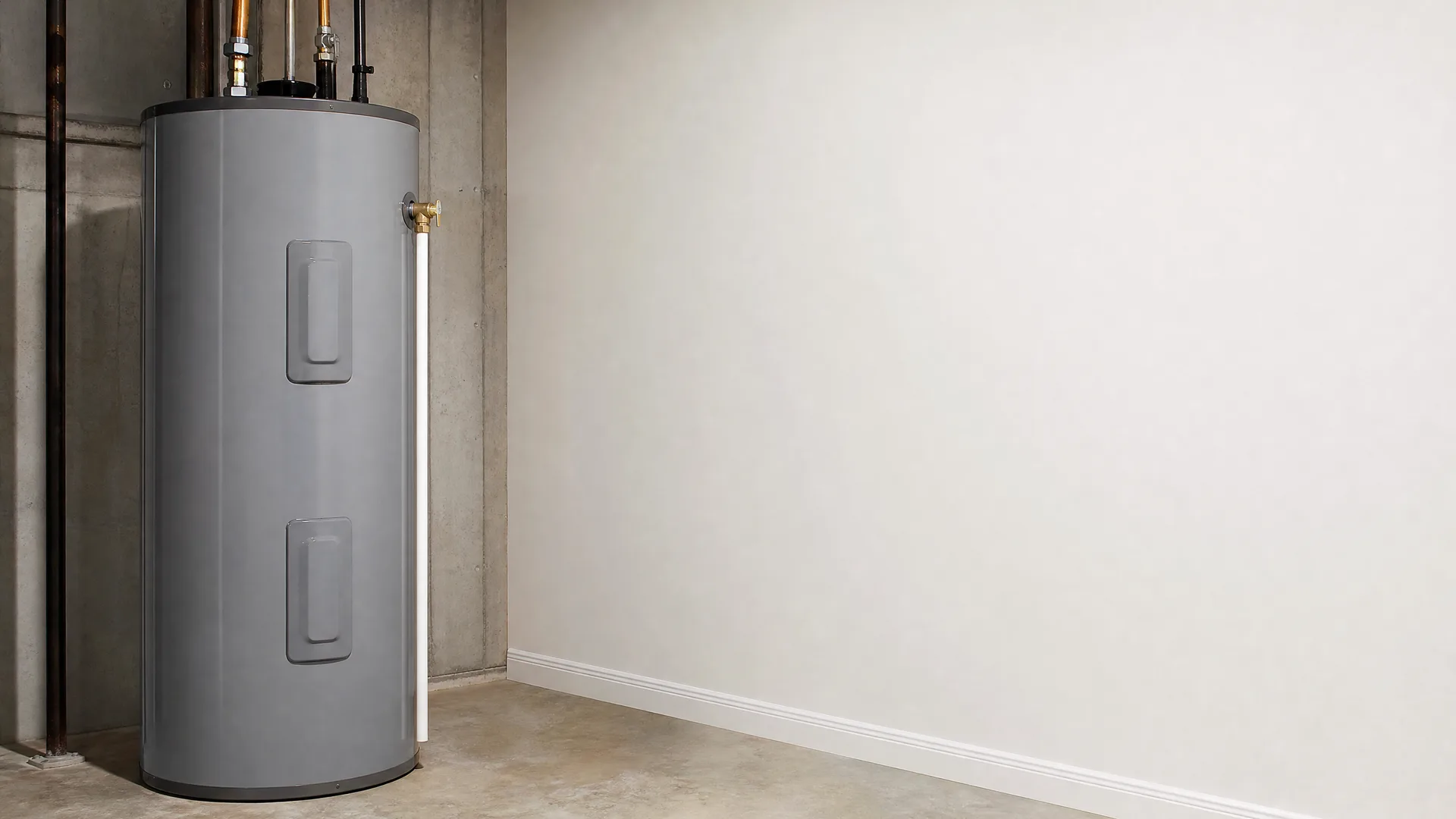
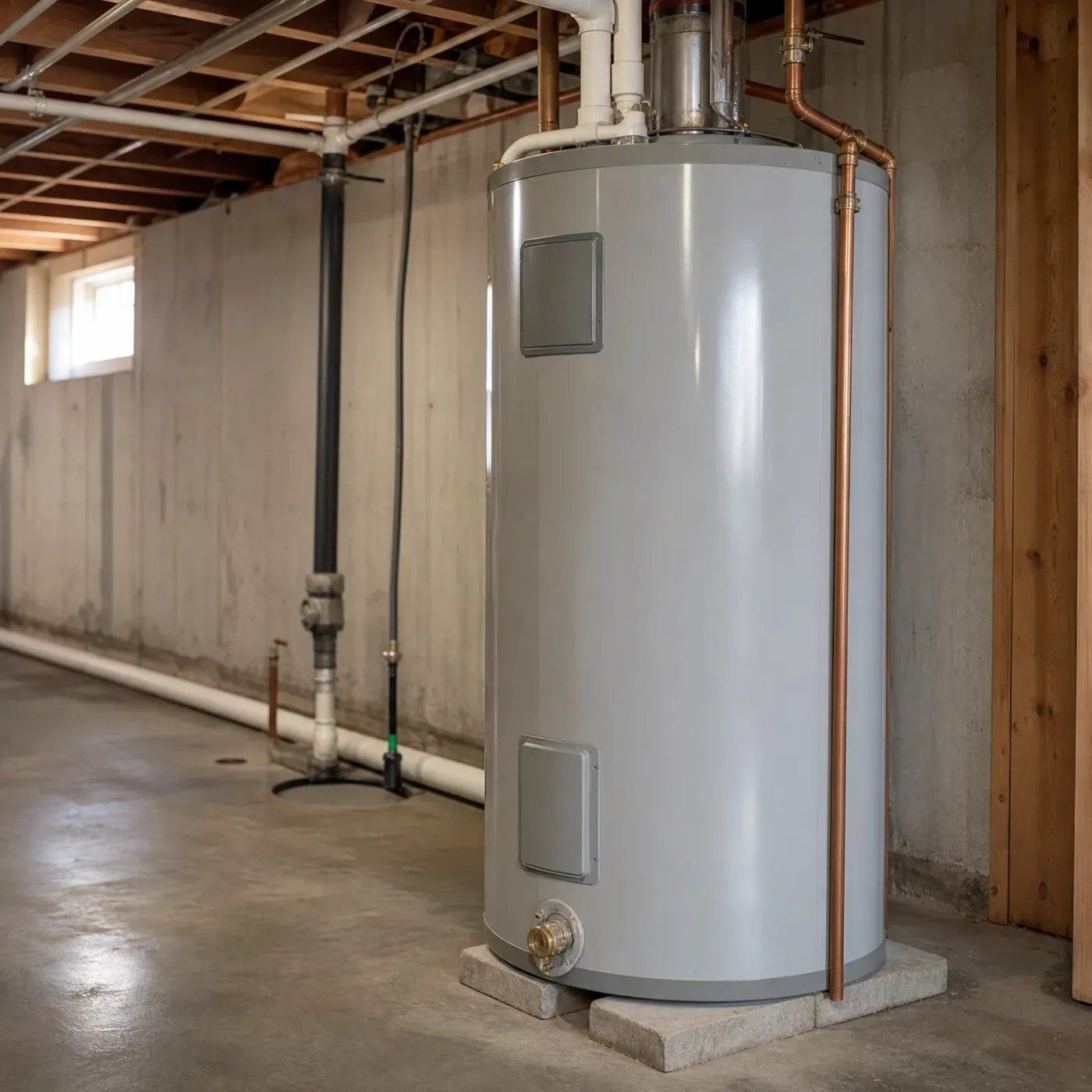
A gray cylindrical electric water heater with two access panels stands in a corner of a room with a concrete floor, connected to overhead pipes and a white drain pipe, beside a plain light-colored wall.

What Gas Actually Buys You Here

A tankless unit runs on the same gas line as a tank, and that matters in Massachusetts where electric rates make an all-electric install expensive to run. A gas tankless heater fires only when a tap opens, so it isn't holding forty or fifty gallons at temperature around the clock. The tradeoff is upfront cost and venting work, since tankless units need their own exhaust setup that a tank heater doesn't.

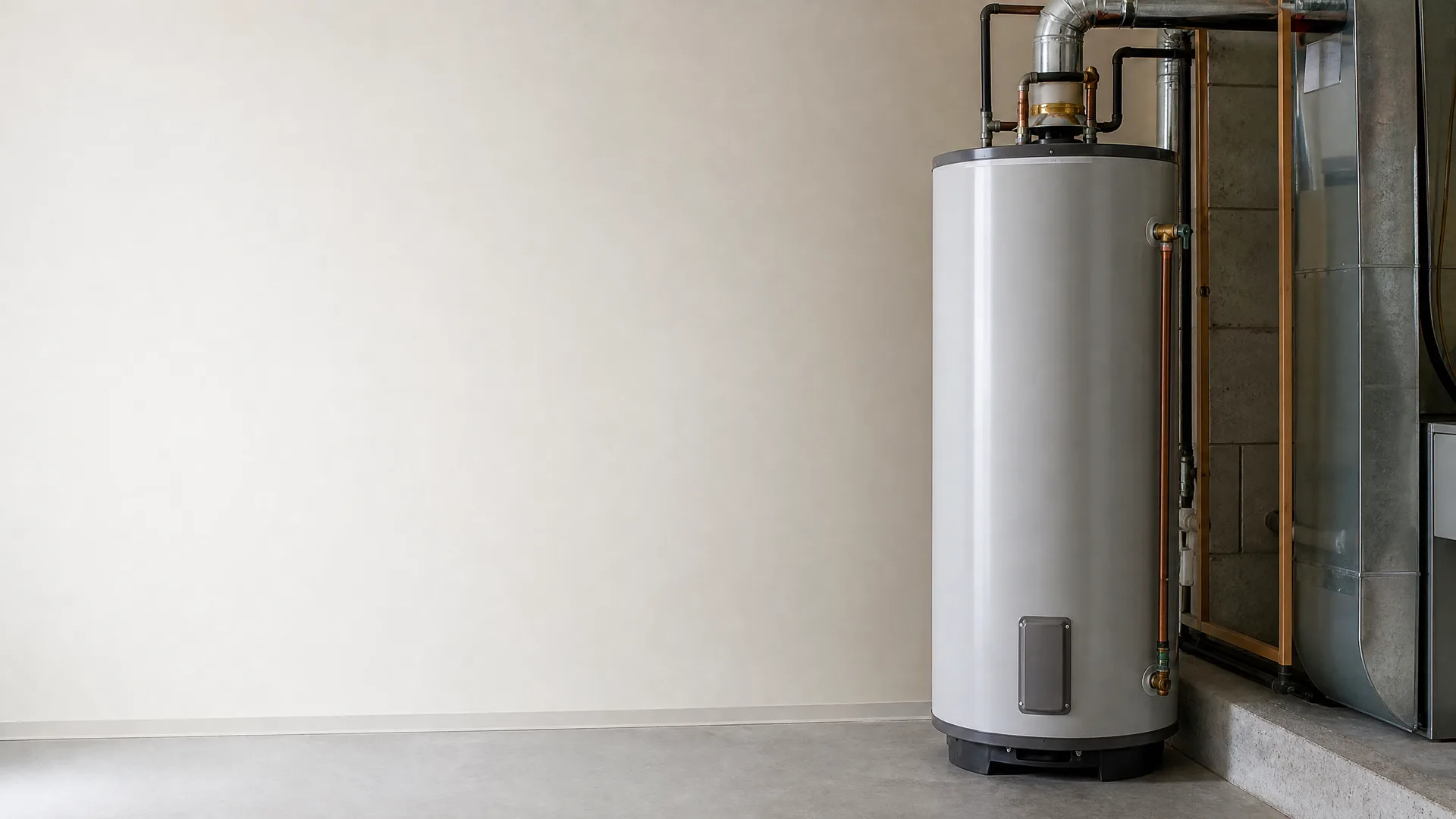
A tall cylindrical water heater with copper and metal pipes at its top stands against a plain beige interior wall on a concrete floor, beside ductwork and a raised concrete step.

Recovery Time With A Full House

A tank heater keeps a set amount of hot water ready, so once it's used up, you wait for it to reheat. A tankless unit doesn't have that limit; it heats water as it flows, so showers back to back don't run it dry. Where that matters most is a house with more than one bathroom running hot water at the same time, which is common enough in a New England household during a cold snap or a busy morning.

Tank or Tankless: Weighing the Choice

Tank

  • A standard 40 or 50 gallon gas tank costs less to install than a tankless unit, since it doesn't need the larger gas line or new venting a tankless often requires.
  • It keeps a set amount of hot water ready, so if your household runs the dishwasher, a shower, and the washing machine at once, recovery time matters more than endless supply.
  • Replacement is usually a same-day swap if the new tank matches the old one's size and venting, which matters if you're down a water heater in the middle of winter.
  • It takes up floor space in the basement or utility closet, which is worth checking before you rule out tankless for a smaller Massachusetts home.
  • The tank holds a fixed reserve, so a long shower that runs past that reserve means waiting for it to reheat.

Tankless

  • It heats water only when a tap is open, so it isn't keeping a tank of water hot around the clock during the months you're barely using it.
  • Hot water doesn't run out the way it does with a tank, which matters for a household that's running several things at once.
  • Installing one often means upsizing the gas line or adding venting the old tank setup didn't need, since gas tankless units have a higher input rating.
  • It mounts on a wall, so it frees up the floor space a tank would otherwise hold in a basement or utility closet.
  • It tends to last longer than a tank unit, though that depends on keeping up with the periodic flushing it needs where water is hard.
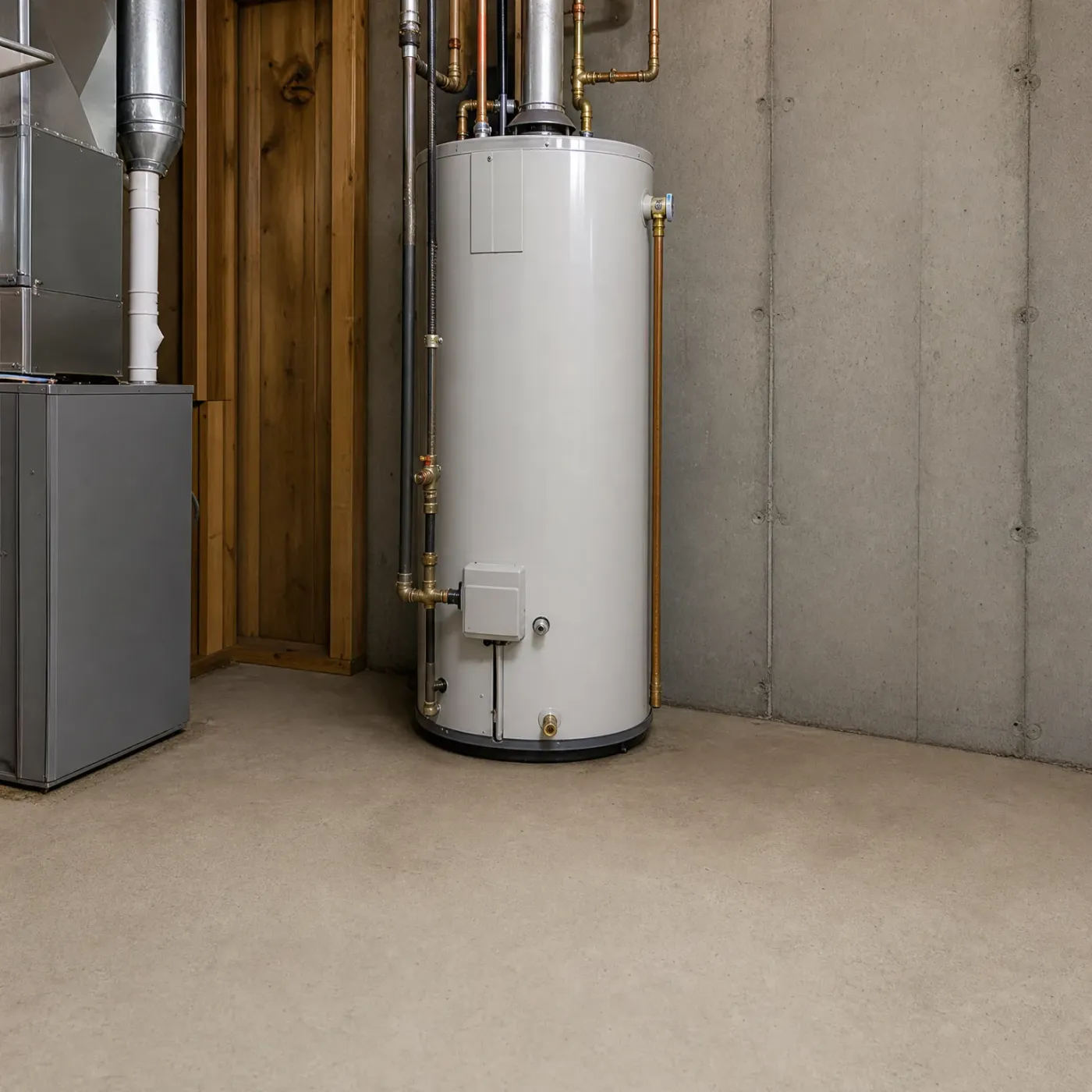
A white cylindrical gas water heater with copper and steel pipes stands against a concrete basement wall beside a gray furnace and wood-paneled wall.

Tank, Running Right

This is a gas tank doing its job, sitting next to the furnace with its vent running up through the ceiling. As long as the gas line, the venting and the anode rod are sound, a tank like this will keep recovering hot water for your household without much drama.

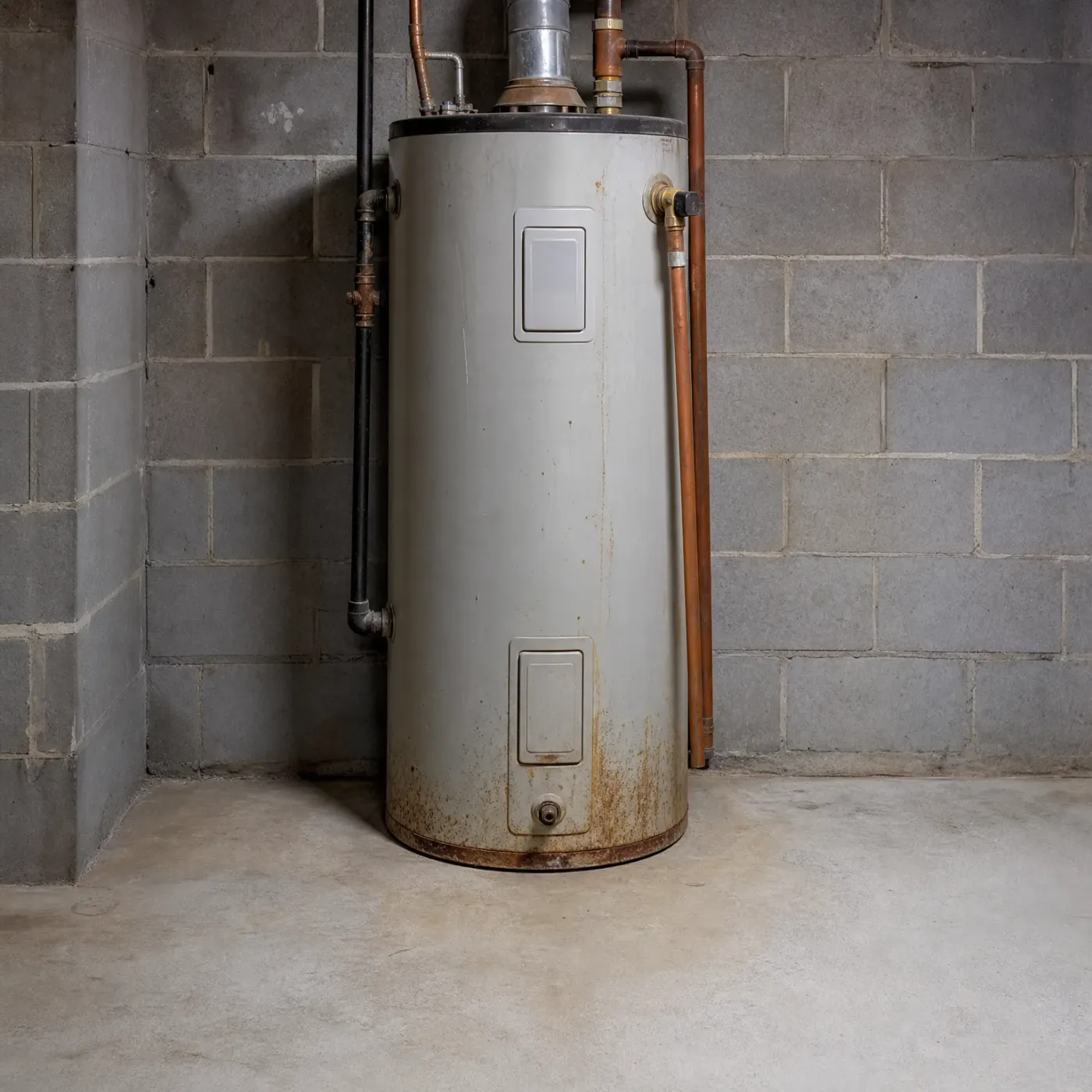
A rust-streaked cylindrical water heater with copper and black metal pipes stands in a concrete-block basement corner on a bare concrete floor.

Tank, Past Its Years

Rust along the base and the seams like this means the tank is failing, not just aging. Once steel starts going at the bottom, it's a matter of when it leaks, not if. An electric tank in this shape also means you've been paying Massachusetts electric rates to run it.

A smiling man in a dark navy sweater sits on a light sofa in a living room, with a glass bowl of popcorn on a wooden coffee table and bookshelves behind him.
A smiling man in a dark green sweater sits on a tan leather sofa in a dimly lit living room, with a bowl of popcorn in the foreground and a kitchen area blurred behind him.
A smiling middle-aged man in a dark shirt sits on a gray sofa in a living room, with a bowl of popcorn on a side table and shelves, a window and kitchen area behind him.
A smiling bearded man in a dark gray t-shirt sits on a gray couch in a living room, with a large glass bowl of popcorn on a wooden table in the foreground.
A large white cylindrical water heater on concrete blocks in a basement with poured concrete walls, exposed joists, copper and PVC piping, and a small window.

It's off your list after this

Your request goes to one pro, not a list of companies.

After this form, you can stop searching for a water heater pro.

Hand it over

You only hire the pro if you want to.

Is your water heater telling you it's time to decide?

A tank that's run out of hot water partway through back to back showers, or one that's started making a low rumble as sediment builds on the bottom, is giving you a reason to look at what comes next. Rust colored water from the hot tap, a tank that's warm to the touch on the outside, or a puddle forming at its base are different signs pointing the same direction. Left alone, a tank in that shape can fail outright, and a tank that lets go can send water across the floor it sits on and whatever's below it. None of this means tankless is the answer for your house. It means the decision is worth making now, not after the tank decides for you.

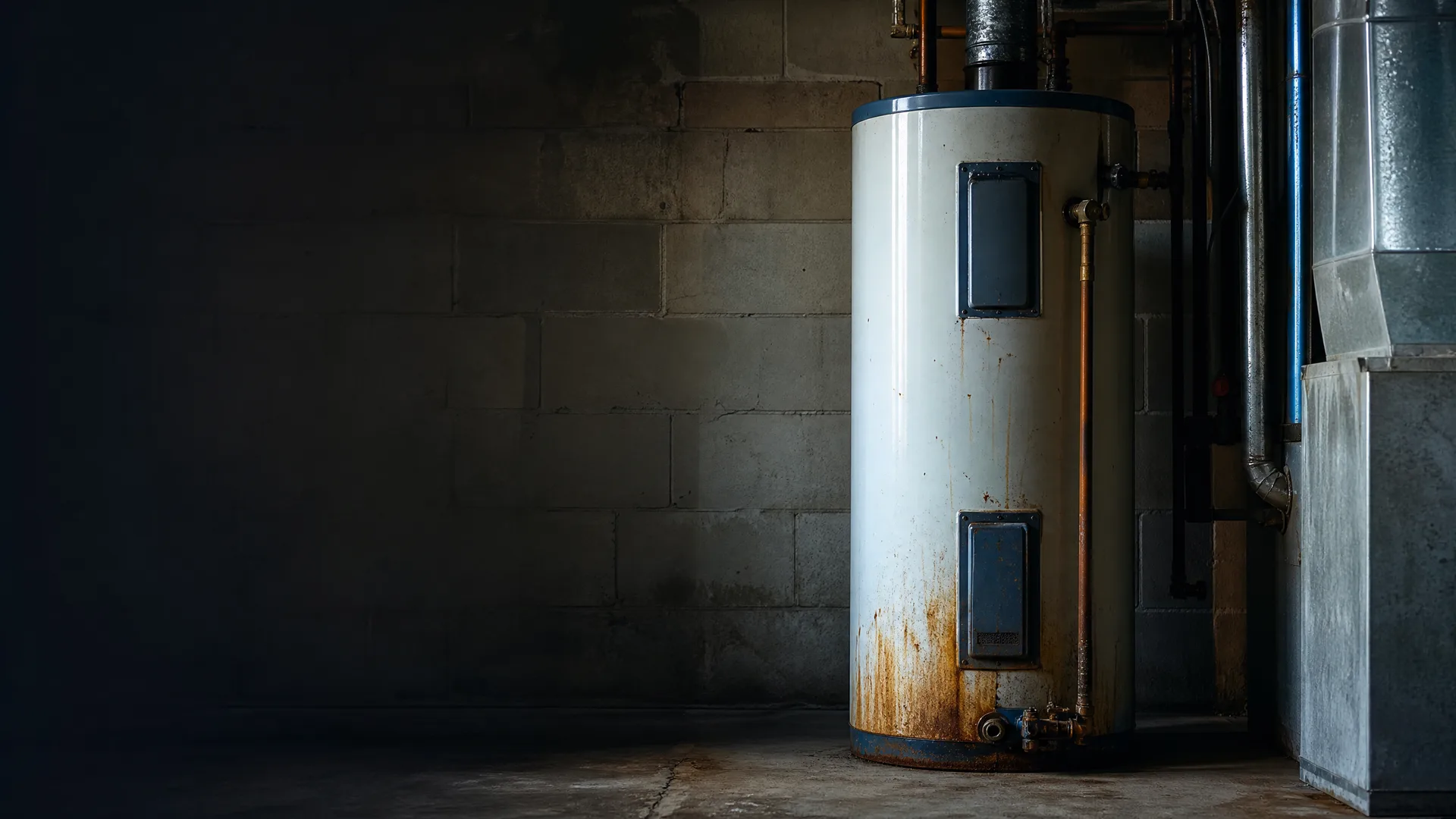
A rusting white and blue water heater with copper and steel pipes stands against a concrete block wall in a dim basement with a bare concrete floor.

You go down to the utility room to grab something off the shelf, and the overhead bulb catches it: a thin line of rust creeping down the side of the tank, pooling where the floor meets the base. It's late, the kind of evening where you're just moving through the house before bed, and this isn't on your list of things to deal with tonight. You crouch down and touch the streak. Dry, but it's been there a while by the look of it. The tank still runs, still gets you hot water in the morning. But you stand there a second longer than you meant to, doing the math on how much longer that's true.


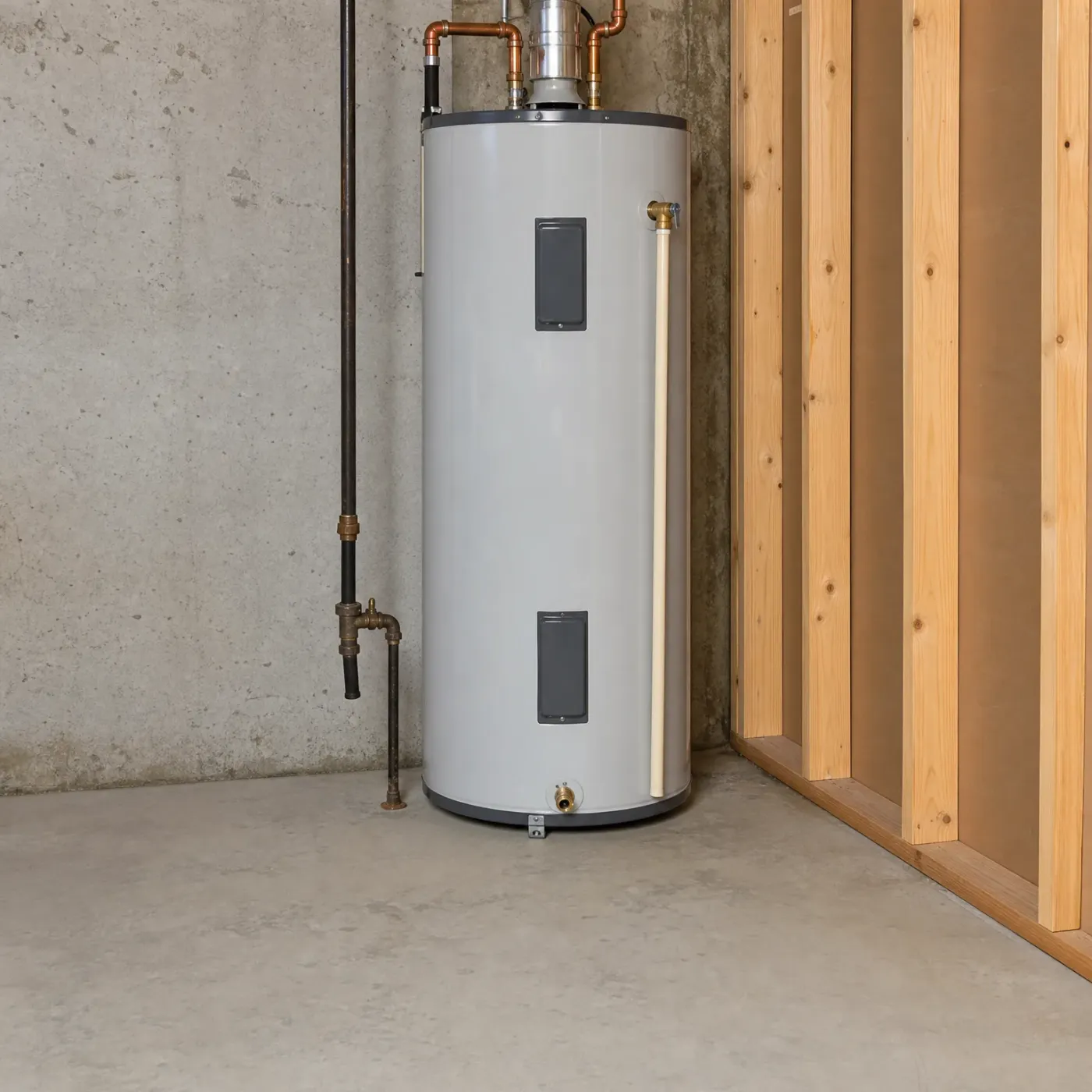
A light gray cylindrical water heater with two access panels stands on a concrete floor against a concrete wall, with copper and black pipes beside it and an unfinished wood stud wall to the right.
A water heater like this, with sound connections and no rust at the base, still has years of hot water left in it.
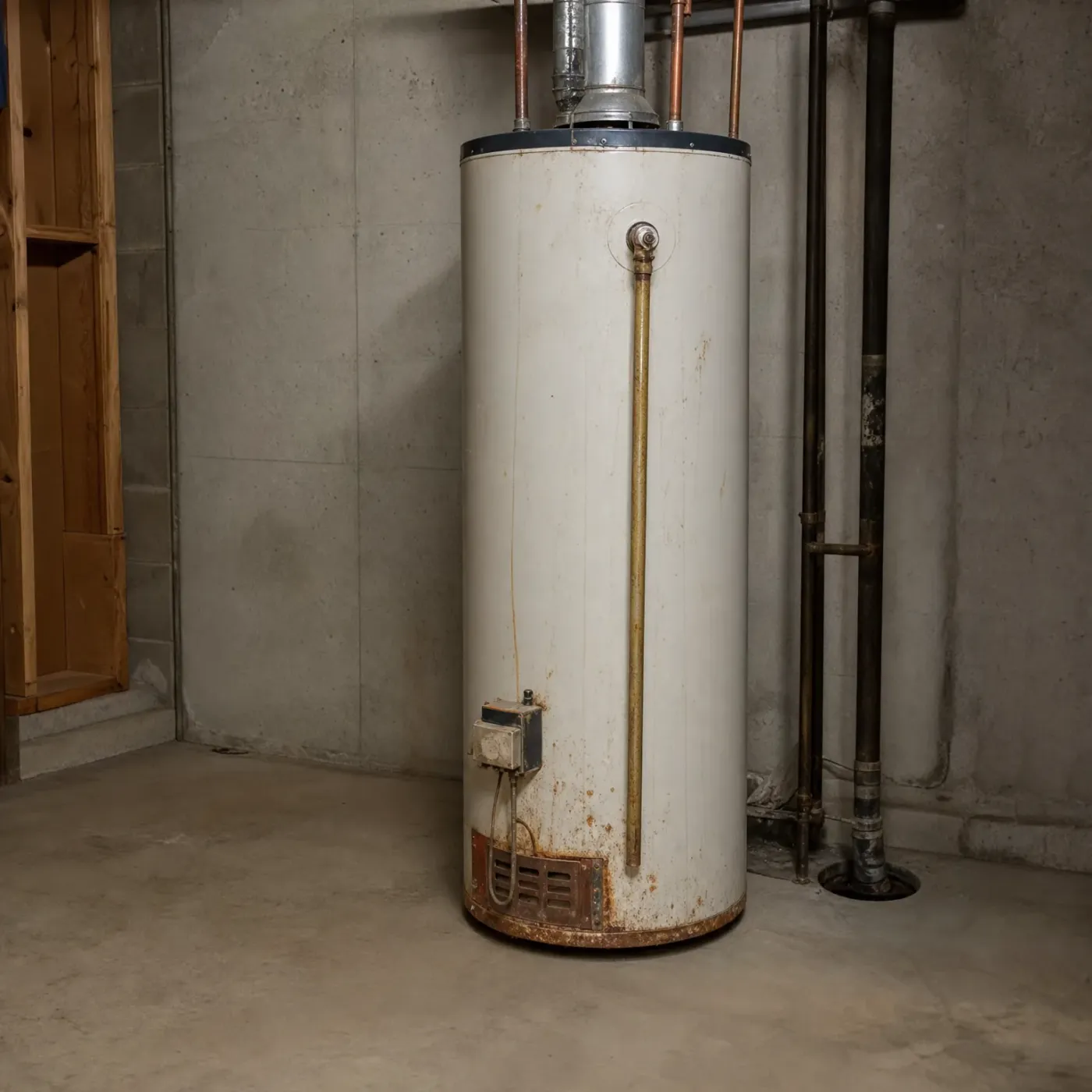
An older white gas water heater with rust staining and an exposed vertical pipe stands against a concrete block basement wall, with a metal flue above and black vertical pipes to the right.
Rust working down the tank and pooling at the base means the tank is failing, not the parts feeding it.

51.6% of homes statewide heat with gas

Just over half the homes in Massachusetts run on gas, and that's likely why your water heater does too. A gas line already at the house is what makes tankless worth pricing out, since the swap is about venting and sizing, not bringing in a fuel you don't have.

ACS 2020-2024 5-year B25040

A gas tank costs less to put in and keeps a set amount of hot water ready. A gas tankless costs more up front, needs the right gas line and venting, but doesn't run out and takes up less space. Which one fits comes down to what your household uses and what your current setup can support, not which is newer or better on paper. If your tank is rusting at the base, rumbling, or coming up short on hot water, that's your answer on timing, whichever way you go on the unit itself. A licensed local contractor who works on both types can look at your gas line, your venting and your actual hot water use, and tell you straight which one makes sense in your house. That's the next step, and it's a shorter one than it seems.

A woman in a dark gray sweater reclines on a light sofa with eyes closed and a slight smile, under a textured gray blanket with an open book resting on her lap, with a lit table lamp and plant in the background.
A smiling bearded man in a navy crewneck sweater sits at a dinner table with a glass of red wine, plates and glasses in the foreground, in a dimly lit room with a lamp and framed picture behind him.

Water Heater Installation

Stop chasing a water heater pro

One installer gets your project, so there's no bidding war over it.

A black-framed smartphone standing upright against a plain white background, its screen filled with solid green.
Step 1 of 3: Equipment