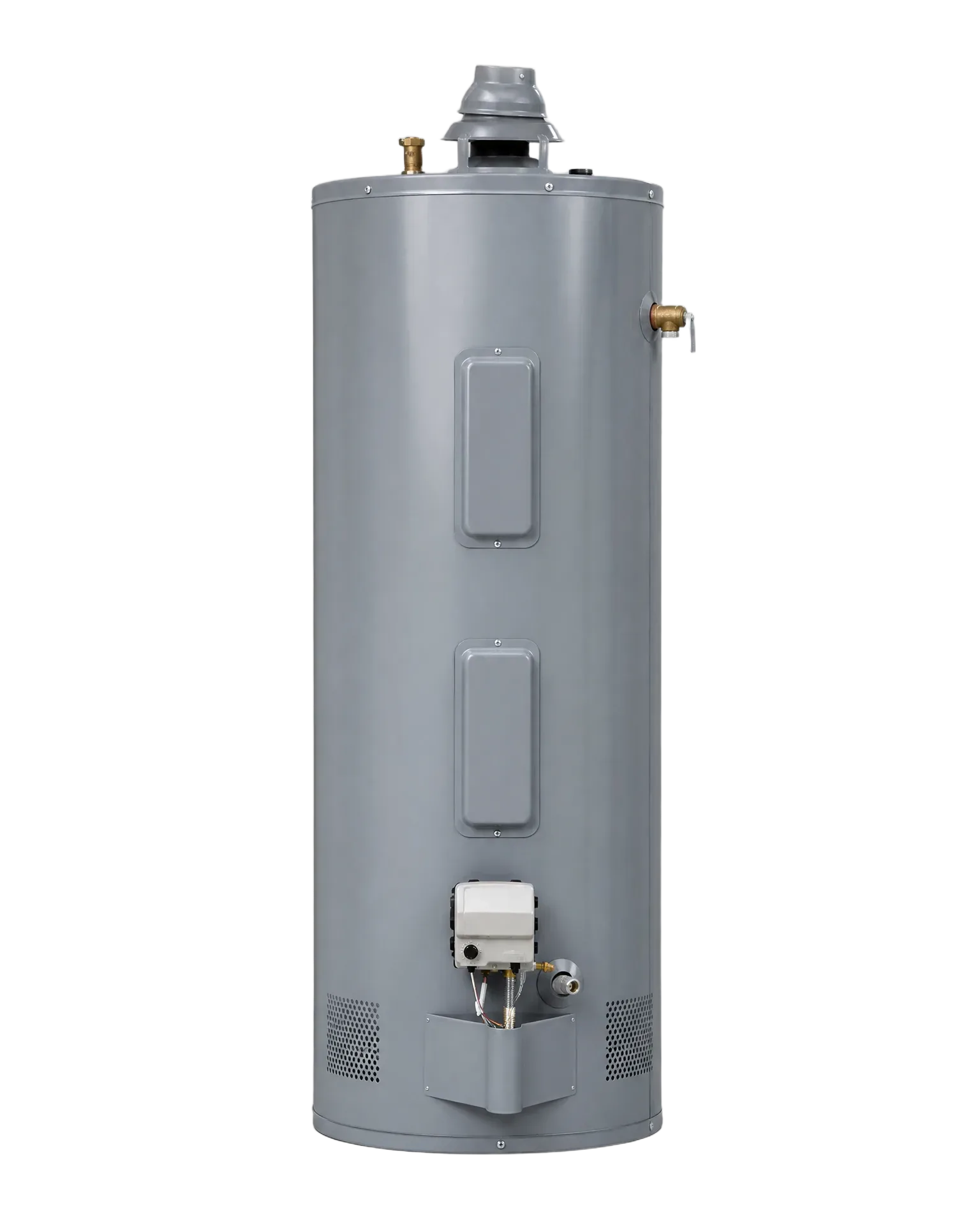
Why is my water heater leaking?
A puddle under the tank, or rust colored water pooling near the base, usually means something inside has given out rather than a one-time spill. Most water heaters in Massachusetts homes run on gas, and a leak often shows up alongside a pilot that won't stay lit or a tank that's been making noise for a while. Catching it early, before it ruins a floor or a finished basement, matters more here than people think.
Most leaks come from a failing tank, a loose fitting, or the pressure relief valve doing its job
A water heater leaks for a few common reasons. The tank itself can corrode from the inside out after years of holding hot water, and once it rusts through, no repair fixes that; it needs replacing. A loose or worn fitting on the inlet or outlet pipe is a simpler fix, and so is a bad drain valve at the bottom of the tank. Sometimes the leak isn't the tank at all. The pressure relief valve on top is built to open if pressure inside builds too high, and water dripping from its overflow pipe means it's doing exactly that. Where the water is coming from changes what happens next, so check the tank itself, the fittings, and that valve before deciding what the fix is.




A gas water heater that leaks from the top is often a loose fitting or a bad inlet valve. A tank leaking from the bottom usually means the tank itself has rusted through from the inside.
Once the tank itself is leaking, it needs to be replaced, not patched. Anything else, a valve, a fitting, a drain line, can usually be repaired without losing the tank.
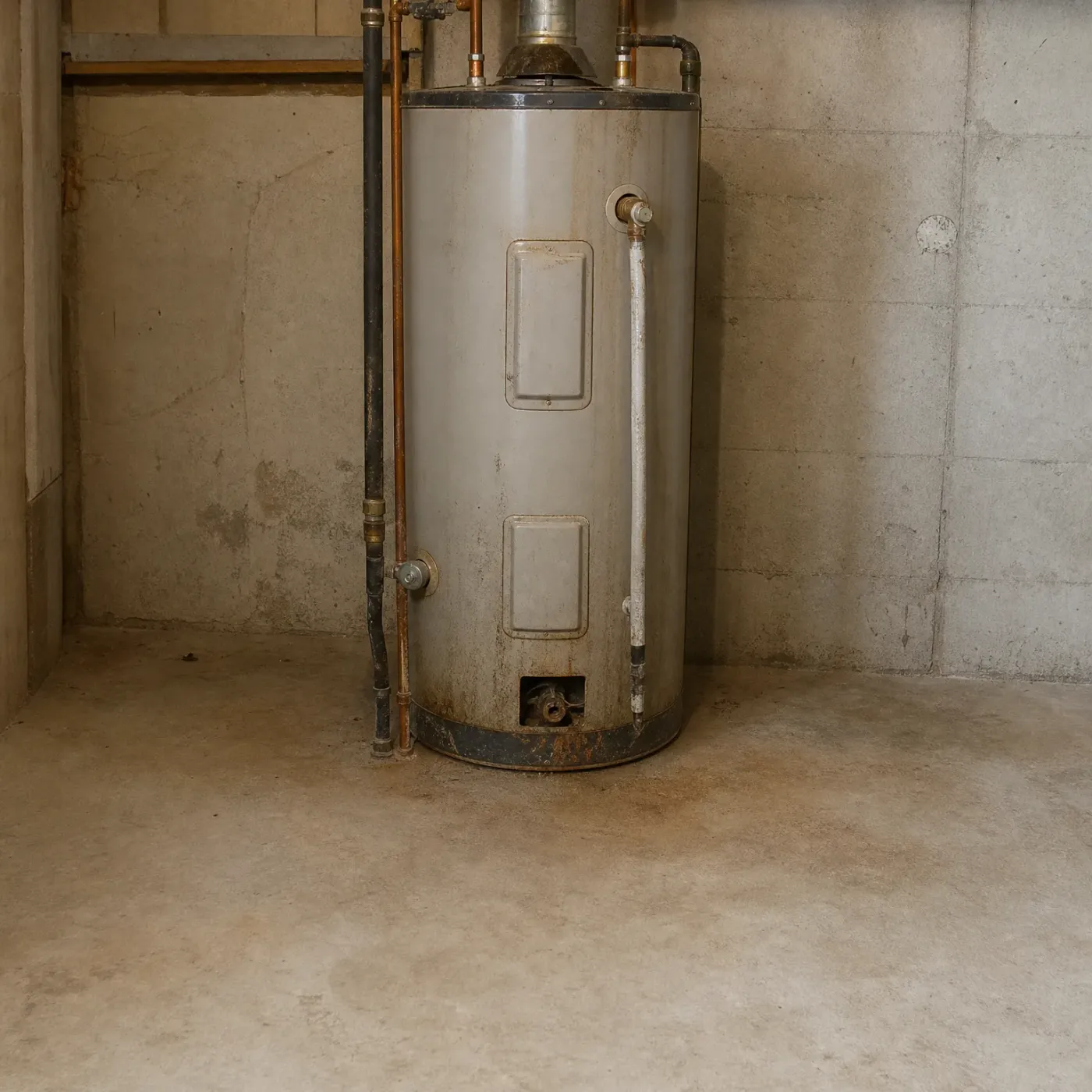
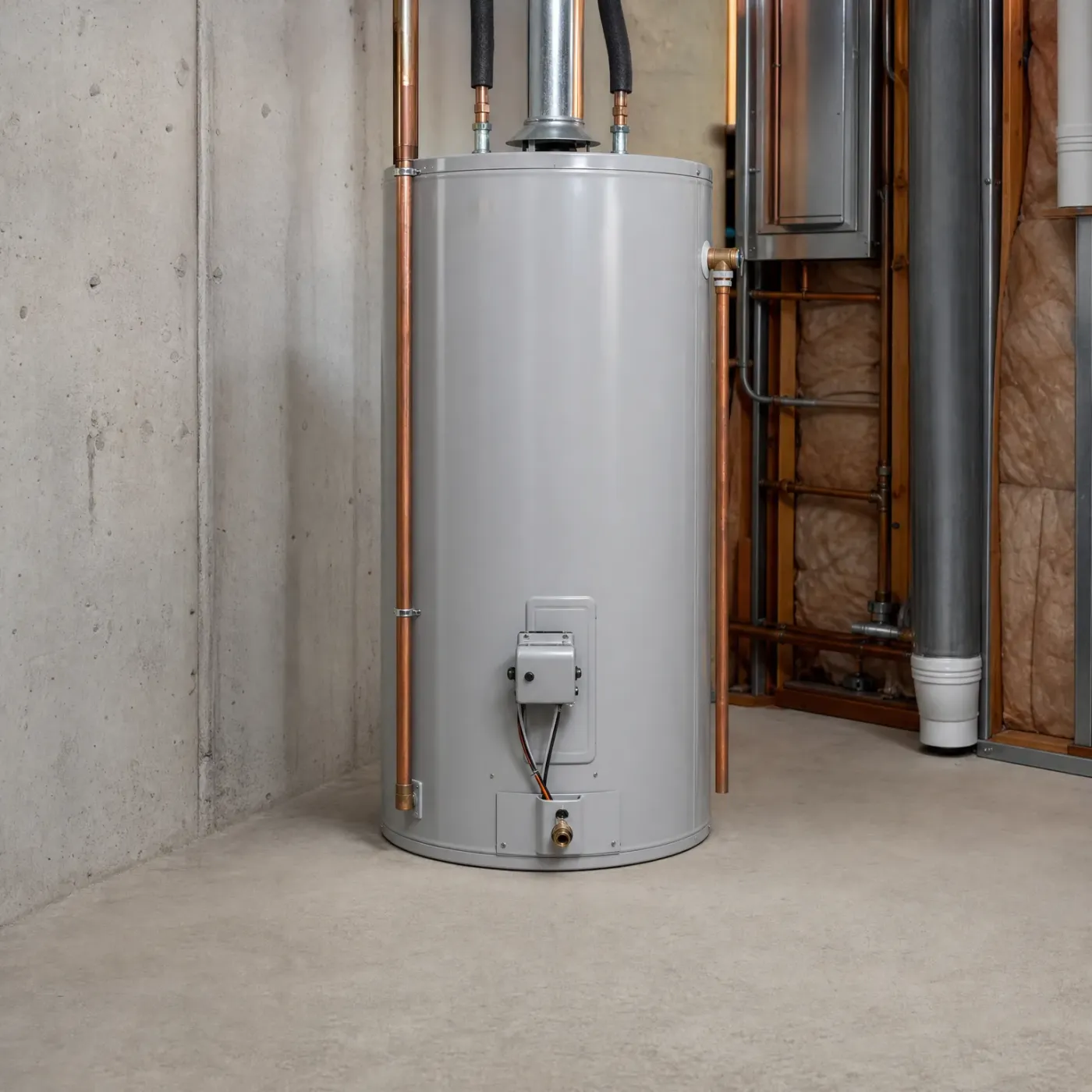
51.6% of homes statewide heat with gas
If your water heater runs on gas, like most in Massachusetts, a leak often starts at a fitting or valve before it ever reaches the tank itself. Catching it there is the difference between a repair and a full replacement.
ACS 2020-2024 5-year B25040
Where the water is actually coming from
- The temperature and pressure relief valve sits near the top of the tank and opens on its own if pressure inside climbs too high.
- A steady drip from the pipe running down the side of the tank often means that valve is doing its job because of a bad thermostat or too much pressure.
- The drain valve near the bottom is for flushing sediment out, and a worn washer or loose cap there can look like a tank leak but isn't.
- Sediment settling at the bottom of a gas tank traps heat against the steel and speeds up the rust that eventually opens a hole.
- Condensation can form on the tank in a cold basement and run down to the floor, which is why a true leak needs to be traced back to its source before anyone assumes the worst.
- The anode rod inside the tank corrodes on purpose to protect the steel, and once it's used up, the tank itself starts to rust from the inside out.
A water heater has more than one place water can escape, and tracing it back matters before anyone calls it a dead tank. Start at the top. The temperature and pressure relief valve is a safety part, not a flaw, and it opens when pressure inside builds past what's safe. If it's letting go on its own, something upstream is pushing it there, usually a thermostat that's run too hot or pressure in the line that's higher than the tank can take. Lower down, the drain valve is a different story. It's just there for flushing sediment out once in a while, and a loose cap or a worn washer at that fitting can drip steadily enough to look like the tank itself has failed when it hasn't. Inside the tank, sediment that's settled at the bottom holds heat against the steel floor, and over time that speeds up corrosion until it finally wears through. The anode rod is supposed to go first. It's built to corrode so the tank doesn't, and once it's spent, rust starts eating the steel instead. One more thing worth ruling out in a Massachusetts basement: condensation. A cold slab under a hot tank can sweat enough to pool on the floor, and that's not a leak at all. Before assuming the worst, it's worth finding exactly which part the water is coming from.


A local pro for your water heater repair
A leaking water heater does not wait for a convenient week. Once the tank or a fitting has given out, the water keeps finding its way out, and in a finished basement or a closet near living space that adds up fast. You want someone who sees this equipment all year and can tell a bad valve from a failed tank by looking at it, not someone guessing over the phone. A local contractor who works on gas water heaters through every Massachusetts winter and summer has already seen whatever is happening under yours. Submitting your information here sends it to one contractor matched to your situation, not a handful of companies competing for the job. That contractor will reach out to you directly about what they found and what it means for your tank. The puddle under it is not going to fix itself while you wait.

A leak tells you something failed. It doesn't tell you what to do next.
A puddle at the base, water tracking along a fitting, a valve dripping into the floor drain. Each of those points to a different part, and each one calls for a different fix. Some of it is a tightened connection. Some of it is a tank that has rusted from the inside and won't hold water again no matter what gets tightened.
What matters now is getting the right person looking at your tank before a slow leak turns into a flooded closet or basement floor. A local contractor who works on water heaters all year, in homes with the same gas lines and the same tanks as yours, can tell the difference fast. You'll be matched with one contractor suited to your situation, not a list of companies competing for the job, and that contractor will reach out to you directly about what they found and what it takes to fix it.


Water Heater Repair
Get the right pro for your water heater

- Tell a local repair pro what your water heater is doing.

- Once you send the form, finding a pro is off your list.
- After you send the request, you're done searching.

- Answer a few questions instead of calling shop after shop.
- Describe your water heater job once, to one pro.

- Only one pro gets your request, so you hear from one company.
- Your request stays with one local pro.