Tell us about the job
Takes about a minute. No obligation.
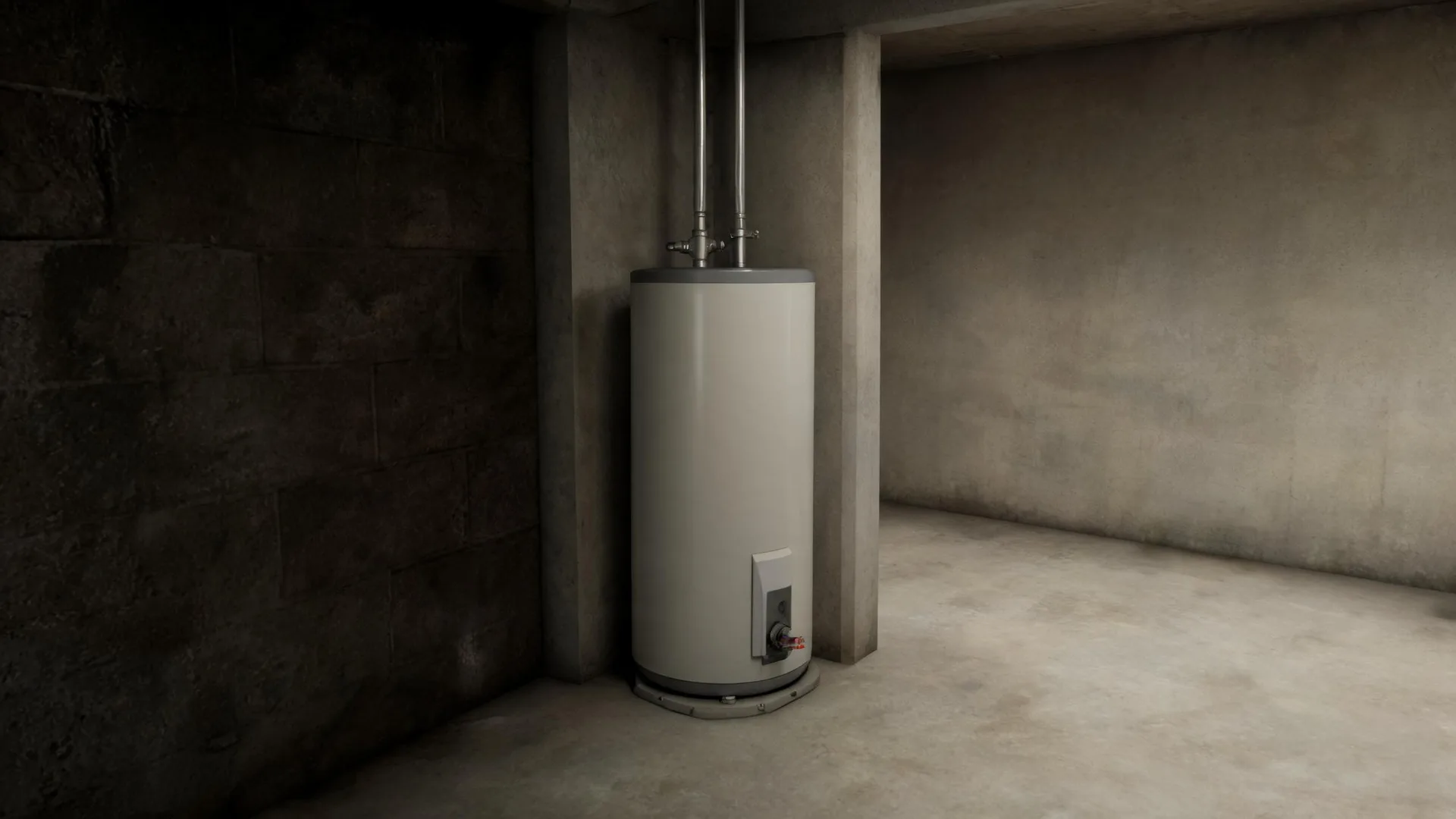
Gas water heaters run every day of the year, not just through a heating season, so the parts that take the load are the ones that cycle constantly: the burner, the thermocouple, and the draft hood. Utility gas heats more occupied homes in Plymouth County, Massachusetts than any other fuel, at 46.9% (2020-2024 ACS 5-year). With gas this dominant, contractors in the area see the same failure patterns repeatedly, and a repair call here almost always starts at the burner assembly and the ignition before moving anywhere else. Sediment in the tank is a secondary concern; combustion components fail first.
Water heater repairs here tend to surface conditions that a newer house is less likely to hold. Half the homes in Plymouth County, Massachusetts were built in 1971 or earlier (2020-2024 ACS 5-year). A contractor who opens a unit in stock this old finds not just the immediate fault but what the system around it has accumulated: sediment loads that affect recovery, corroded inlet and outlet connections, and pressure relief valves that have never been tested. Those surrounding conditions shape both what parts get ordered and whether the tank itself is worth repairing.
The Parts of a Water Heater a Contractor Checks During Repair
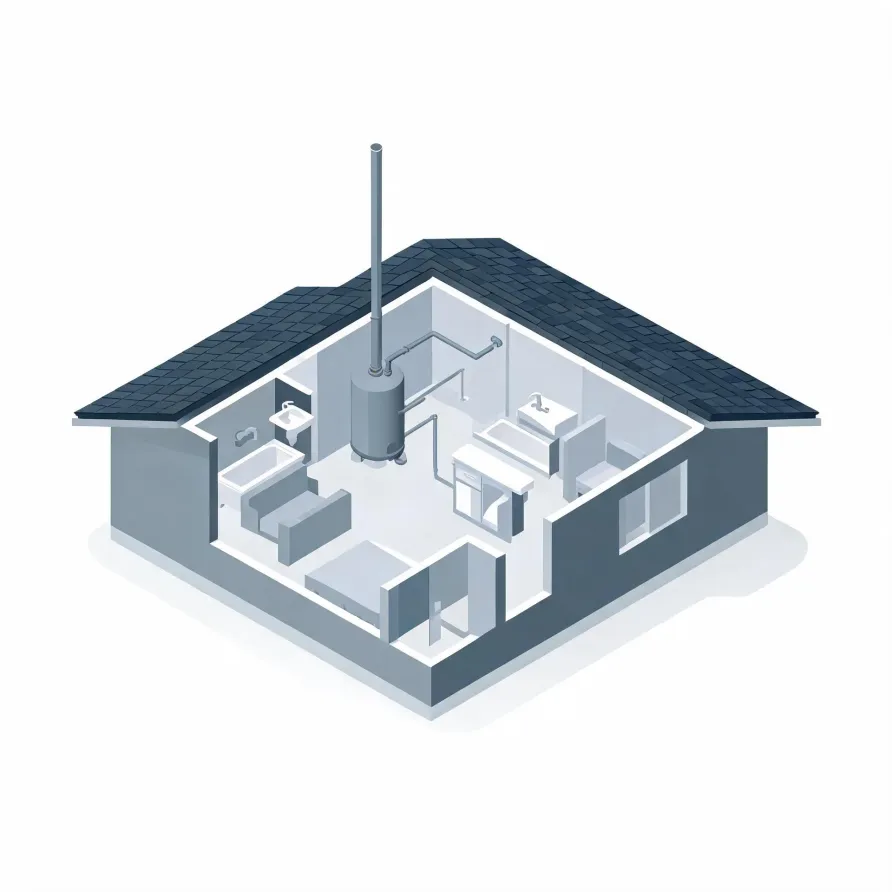
The tank is the piece a homeowner notices first, sitting in a utility room, basement, or closet, and its job is to hold water at a set temperature ready for use. The burner assembly or heating element sits at the base or inside the tank depending on whether the unit runs on gas or electricity, and this is where a contractor looks when the water stops getting hot.
The thermostat controls the target temperature and tells the heating source when to run. The pressure relief valve mounts on the side of the tank and releases if internal pressure climbs too high. The anode rod hangs inside the tank and pulls corrosion away from the tank walls, and a contractor will pull it to see what condition the interior is in.
The drawing shows the general layout of these components, and a licensed contractor determines which of them applies to the repair needed in your particular home.
Find a contractor in Plymouth CountyPlymouth County, by the numbers
449 severe weather events were recorded in Plymouth County, Massachusetts between 2015 and 2024.
NOAA National Centers for Environmental Information, Storm Events Database, bulk CSV export, events 2015-01-01 through 2024-12-31.Half the homes in Plymouth County, Massachusetts were built in 1971 or earlier (2020-2024 ACS 5-year).
U.S. Census Bureau, 2020-2024 American Community Survey 5-Year EstimatesPlymouth County, Massachusetts holds 218,096 housing units (2020-2024 ACS 5-year).
U.S. Census Bureau, 2020-2024 American Community Survey 5-Year EstimatesOwners occupy 77.6% of the occupied homes in Plymouth County, Massachusetts (2020-2024 ACS 5-year).
U.S. Census Bureau, 2020-2024 American Community Survey 5-Year EstimatesSevere Weather Events in Plymouth County
Extreme weather puts water heaters under stress, accelerating wear on components that run harder and longer to compensate for temperature swings and power disruptions. How often that pressure hits is a local fact, and Plymouth County's record shapes what repair work looks like here.
449 severe weather events, 2015–2024. Source: NOAA National Centers for Environmental Information, Storm Events Database.